
Introduction
As parents age, healthcare needs increase and medical expenses can become a significant financial burden.
Many families realize the importance of health insurance for parents only after facing a major hospitalization or medical emergency.
The right health insurance plan can help protect your parents from rising healthcare costs while safeguarding your family’s finances.
In this guide, you’ll learn how to choose health insurance for parents, recommended coverage amounts, important features to compare, common mistakes to avoid, and practical tips for finding the right policy in 2026.
Affiliate Disclosure:
Some links may be affiliate links. We may earn a commission at no extra cost to you.
Table of Contents
- Why Parents Need Health Insurance
- Challenges of Buying Health Insurance for Parents
- Key Features to Compare
- Recommended Coverage by Age Group
- Family Floater vs Separate Policy for Parents
- Real-Life Examples
- Common Mistakes to Avoid
- FAQ
Why Parents Need Health Insurance
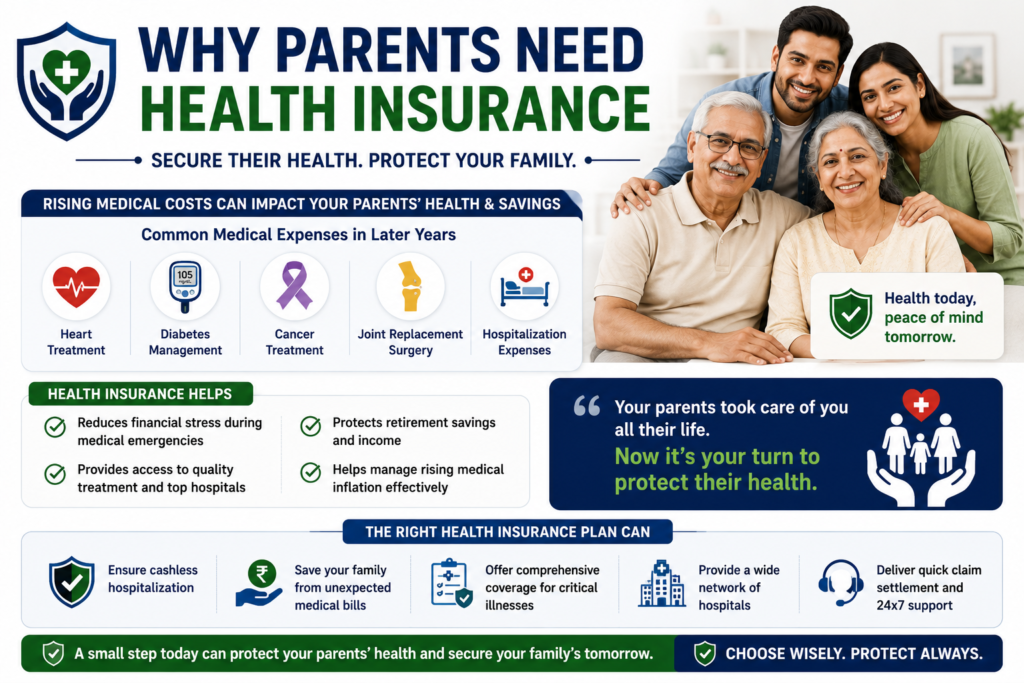
Healthcare costs tend to increase with age.
Common medical expenses include:
- Heart treatment
- Diabetes management
- Cancer treatment
- Joint replacement surgery
- Hospitalization expenses
Health insurance helps:
✔ Reduce financial stress
✔ Access quality hospitals
✔ Protect retirement savings
✔ Manage rising medical inflation
Challenges of Buying Health Insurance for Parents
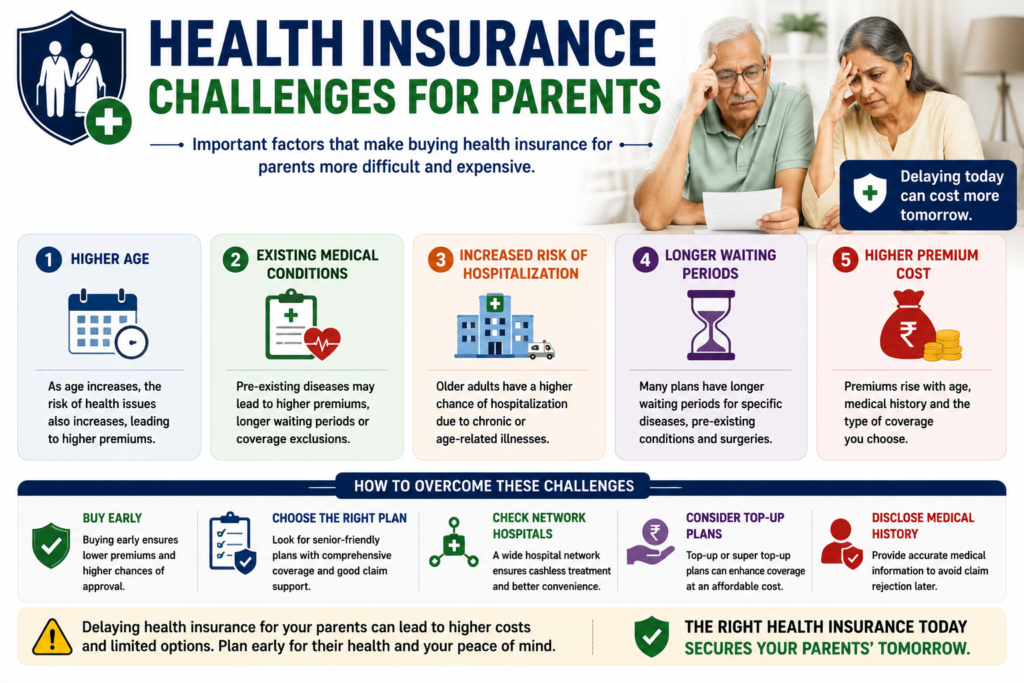
Health insurance for parents can be more expensive because:
- Higher age
- Existing medical conditions
- Increased hospitalization risk
- Longer waiting periods
However, delaying purchase may increase costs further.
Key Features to Compare
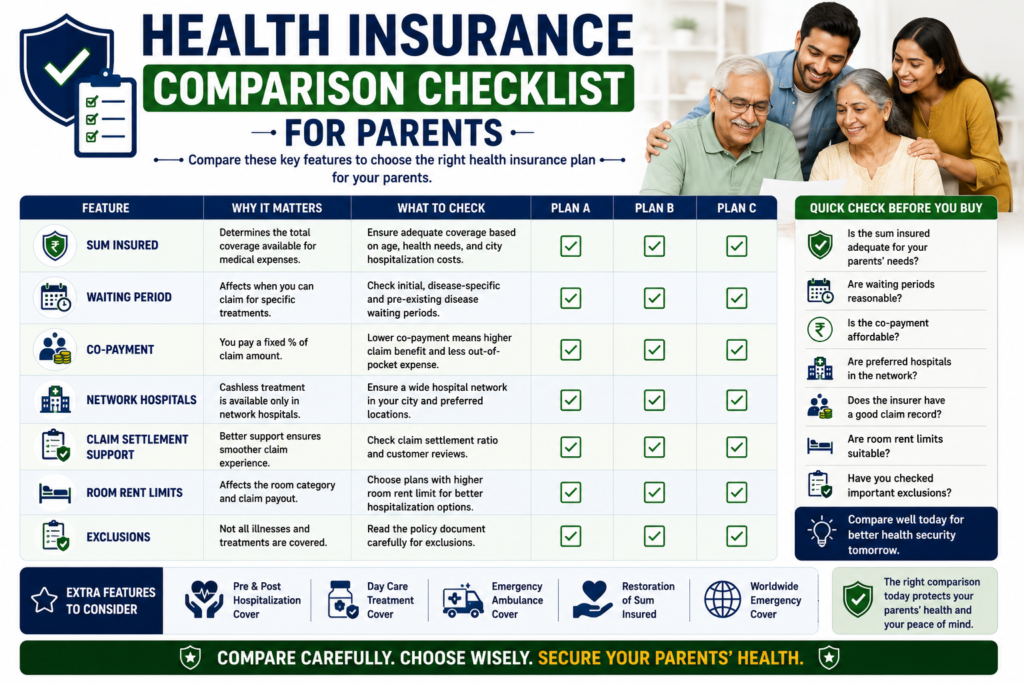
Before choosing a policy, compare:
| Feature | Why It Matters |
|---|---|
| Sum Insured | Coverage amount available |
| Waiting Period | Impacts claim eligibility |
| Co-Payment | Affects out-of-pocket expenses |
| Network Hospitals | Supports cashless treatment |
| Claim Settlement Support | Better claim experience |
| Room Rent Limits | Influences claim payout |
Recommended Coverage by Age Group
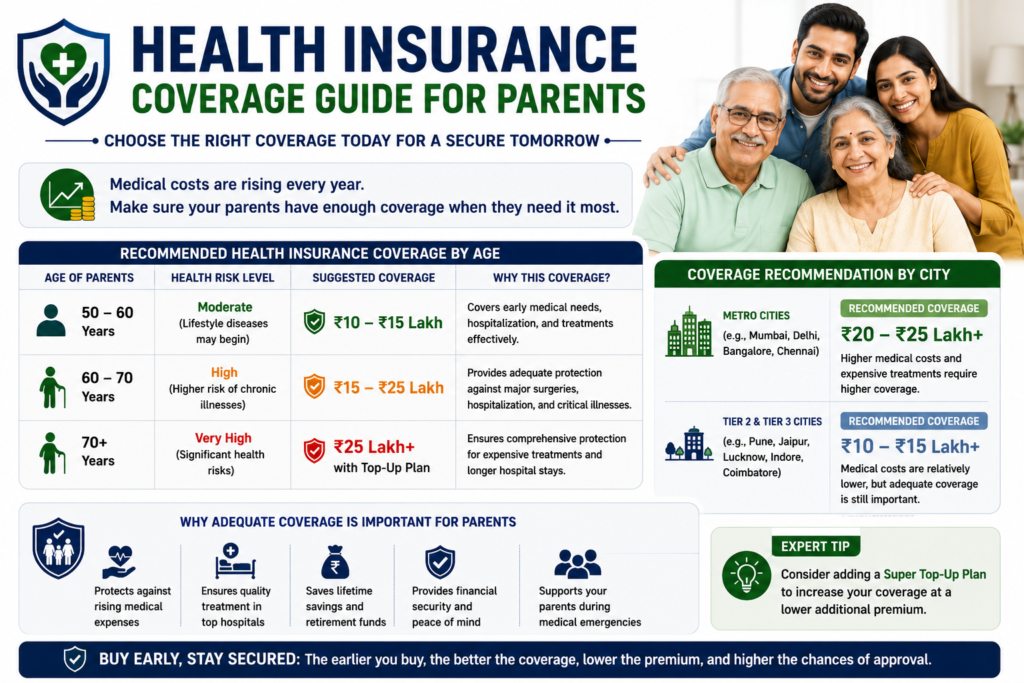
| Age | Suggested Coverage |
|---|---|
| 50–60 | ₹10–15 lakh |
| 60–70 | ₹15–25 lakh |
| 70+ | ₹25 lakh+ |
Metro Cities
Recommended:
₹20–25 lakh+
Tier 2 & Tier 3 Cities
Recommended:
₹10–15 lakh+
Family Floater vs Separate Policy for Parents
Family Floater
Advantages:
✔ Single policy
✔ Easier management
Disadvantages:
✖ Premium increases significantly when elderly parents are included.
Separate Policy
Advantages:
✔ Dedicated coverage
✔ Better claim protection
✔ More suitable for older parents
Our Recommendation
In most cases, elderly parents should have separate health insurance policies.
Real-Life Examples
Example 1
Parents:
Age 55 and 53
Recommended:
₹15 lakh coverage
Reason:
Moderate healthcare risk.
Example 2
Parents:
Age 67 and 64
Recommended:
₹25 lakh coverage with top-up plan.
Reason:
Higher medical expenses.
Example 3
Parents:
Age 72 and 70
Recommended:
Separate individual policies with comprehensive coverage.
Compare Health Insurance Plans
Before purchasing:
✔ Compare premiums
✔ Compare waiting periods
✔ Compare hospital networks
✔ Compare claim support
👉 Compare health insurance plans for parents through Policybazaar.
(Link)
Common Mistakes to Avoid
Buying Low Coverage
Medical costs can rise significantly with age.
Ignoring Waiting Periods
Review policy conditions carefully.
Choosing Only Based on Premium
Coverage quality matters.
Including Parents in Family Floater Without Evaluation
This may increase costs and reduce efficiency.
Delaying Purchase
Premiums generally increase with age.
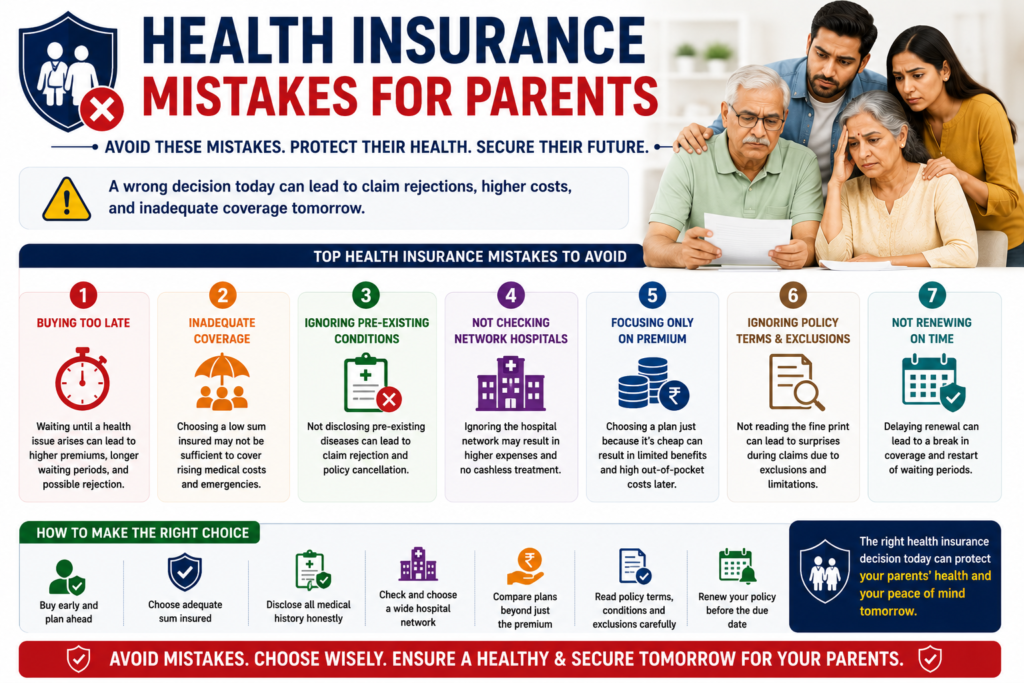
Safe Health Insurance Buying Tips
✔ Buy early
✔ Choose adequate coverage
✔ Review exclusions
✔ Compare multiple plans
✔ Consider super top-up plans
✔ Disclose medical history honestly
Our Recommendation
Parents in Their 50s
₹10–15 lakh coverage
Parents in Their 60s
₹15–25 lakh coverage
Parents Above 70
₹25 lakh+ with top-up plans
Metro City Residents
Higher coverage recommended due to healthcare costs.
External Reference
For consumer awareness and insurance regulations, refer to IRDAI.
Our Experience
At Nivesh Saathi, we regularly analyze health insurance products, claim trends, healthcare costs, and policy features to help families choose suitable coverage for their parents.
Conclusion
Health insurance for parents is one of the most important financial protections a family can have.
Buying adequate coverage early can help manage healthcare costs, reduce financial stress, and provide peace of mind during medical emergencies.
Compare Plans Now
Compare premiums, features, and coverage options through Policybazaar.
(Link)
Related Articles
- How Much Health Insurance Cover Do You Need in India? (2026 Guide)
- Family Floater vs Individual Health Insurance
- Best Health Insurance Plans for Families in India
FAQ
Which health insurance is best for parents in India?
The best plan depends on age, health conditions, coverage needs, and budget.
How much health insurance coverage do parents need?
Many experts recommend ₹15–25 lakh or more depending on age and city.
Can parents be included in a family floater policy?
Yes, but separate coverage is often more suitable for older parents.
Is health insurance expensive for senior parents?
Premiums generally increase with age and medical risk.
What is a super top-up plan?
A super top-up plan provides additional coverage above a specified deductible.
Should parents buy separate health insurance?
In many cases, separate policies provide better protection and claim flexibility.
Can pre-existing diseases be covered?
Many plans provide coverage after completion of waiting periods.
When should parents buy health insurance?
The earlier, the better, as premiums and eligibility are usually more favorable at younger ages.
About the Author
Shashikant Pawar is the founder of Nivesh Saathi and writes practical guides on insurance, loans, investments, and personal finance for Indian readers.
About Nivesh Saathi
Nivesh Saathi helps Indians make smarter financial decisions through trustworthy, easy-to-understand financial education and product comparisons.
Disclaimer
This article is for educational purposes only and should not be considered insurance advice. Please review policy documents carefully before purchasing insurance.