
Introduction
Many people believe that having a pre-existing disease means they cannot get health insurance. Fortunately, that is not true.
Today, most health insurance companies in India offer coverage for pre-existing diseases (PEDs), although benefits usually become available after a specified waiting period.
Whether you have diabetes, hypertension, thyroid disorders, asthma, heart disease, or other chronic medical conditions, choosing the right health insurance plan can help protect you from rising healthcare costs.
In this guide, you’ll learn how pre-existing disease coverage works, waiting periods, common exclusions, coverage recommendations, and how to choose the right health insurance plan in 2026.
Affiliate Disclosure:
Some links may be affiliate links. We may earn a commission at no extra cost to you.
Table of Contents
- What Is a Pre-Existing Disease?
- Common Pre-Existing Diseases Covered
- How Coverage Works
- Waiting Period Explained
- Features to Compare
- Common Mistakes to Avoid
- FAQ
What Is a Pre-Existing Disease?
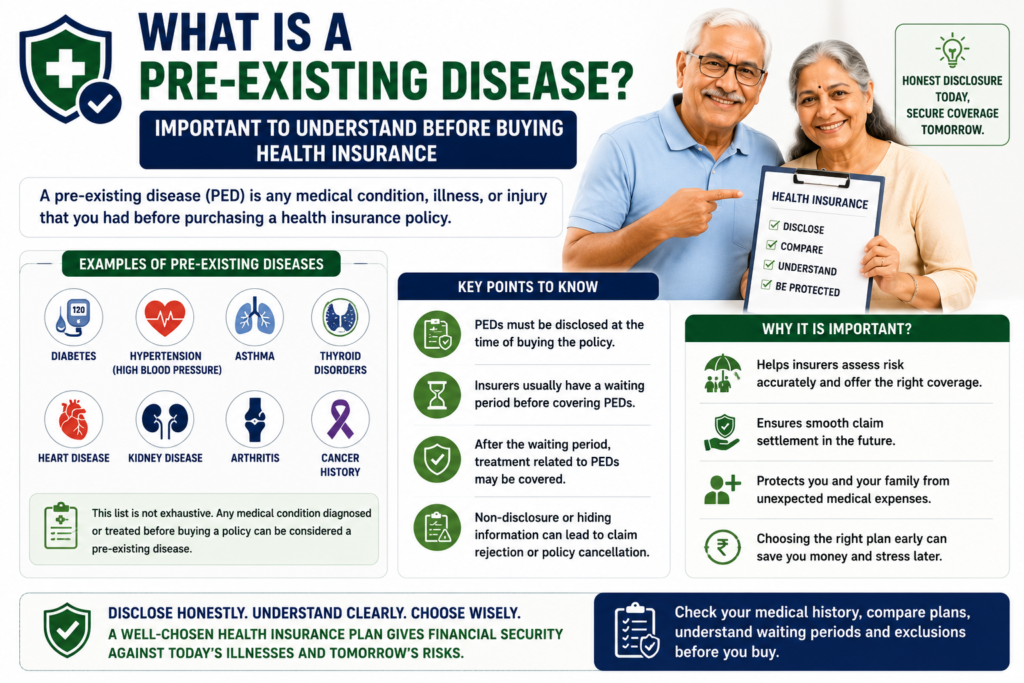
A pre-existing disease is a medical condition that existed before purchasing a health insurance policy.
Examples include:
- Diabetes
- High Blood Pressure (Hypertension)
- Asthma
- Thyroid Disorders
- Heart Disease
- Kidney Disease
- Cancer History
Most insurers require disclosure of these conditions during policy purchase.
Common Pre-Existing Diseases Covered
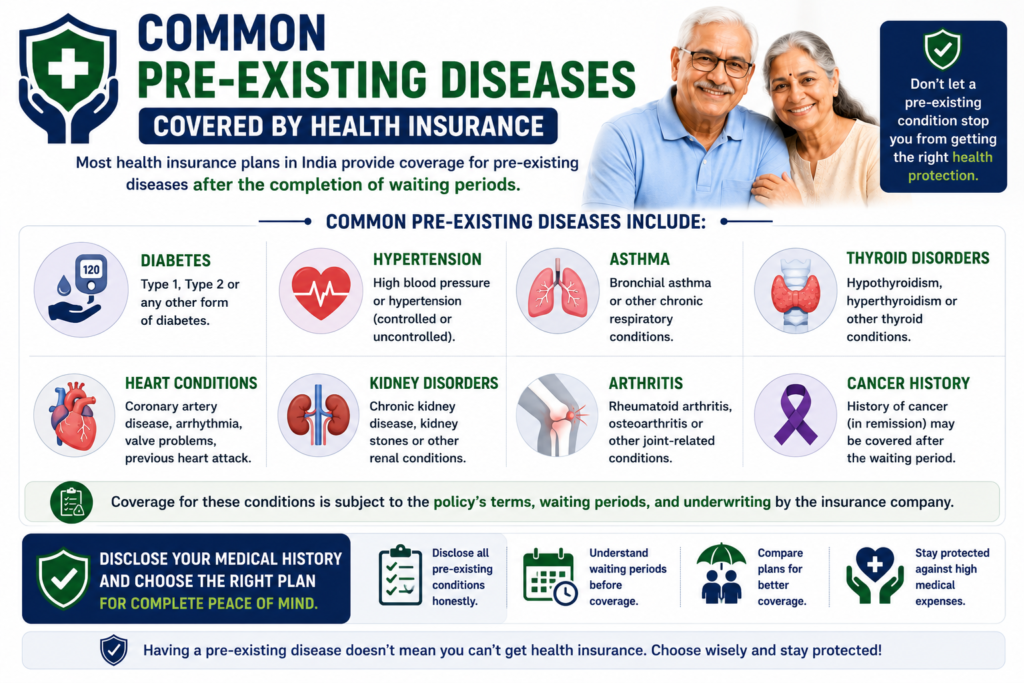
Many health insurance plans provide coverage for:
✔ Diabetes
✔ Hypertension
✔ Thyroid Disorders
✔ Asthma
✔ Heart Conditions
✔ Arthritis
✔ Kidney Disorders
Coverage is usually available after completion of policy waiting periods.
How Health Insurance Coverage Works for Pre-Existing Diseases
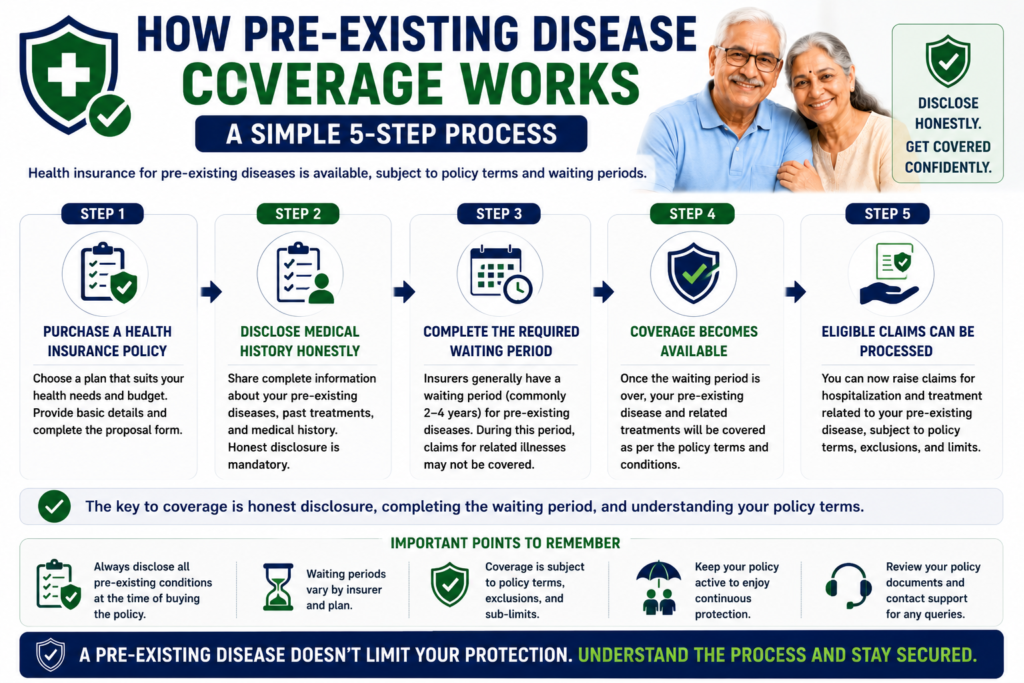
Step 1
Purchase a health insurance policy.
Step 2
Disclose medical history honestly.
Step 3
Complete the required waiting period.
Step 4
Coverage becomes available according to policy terms.
Step 5
Eligible claims can be processed subject to policy conditions.
Waiting Period Explained
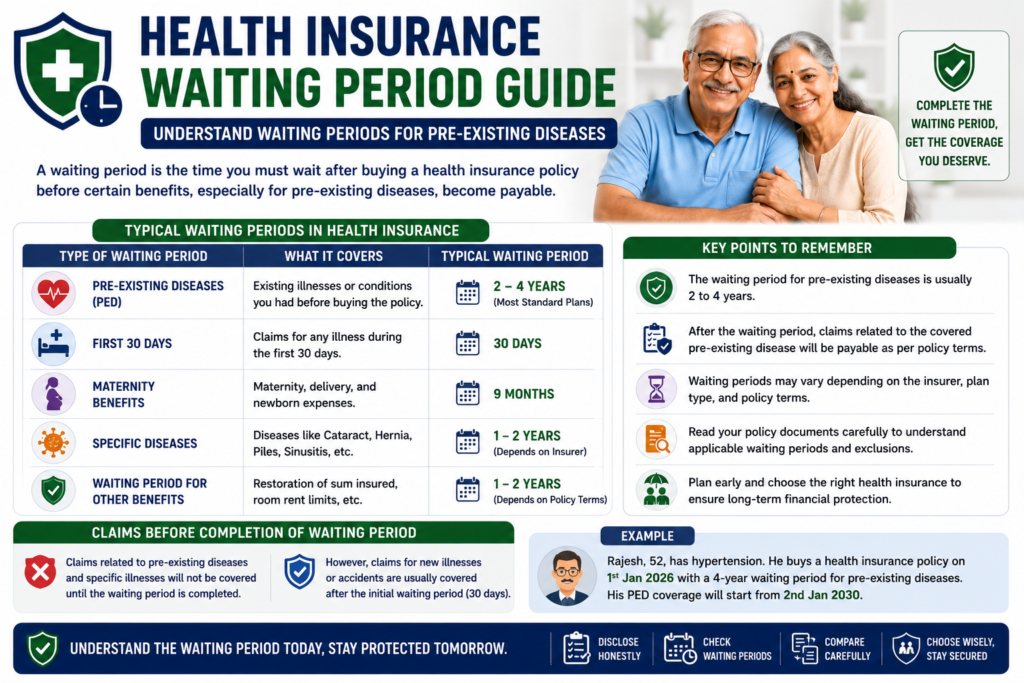
Most health insurance plans impose a waiting period for pre-existing diseases.
Typical waiting periods:
| Type | Typical Waiting Period |
|---|---|
| Standard Plans | 2–4 Years |
| Some Premium Plans | Lower Waiting Period |
| Specific Diseases | Policy Dependent |
Important
Claims related to pre-existing diseases are generally covered only after the waiting period ends.
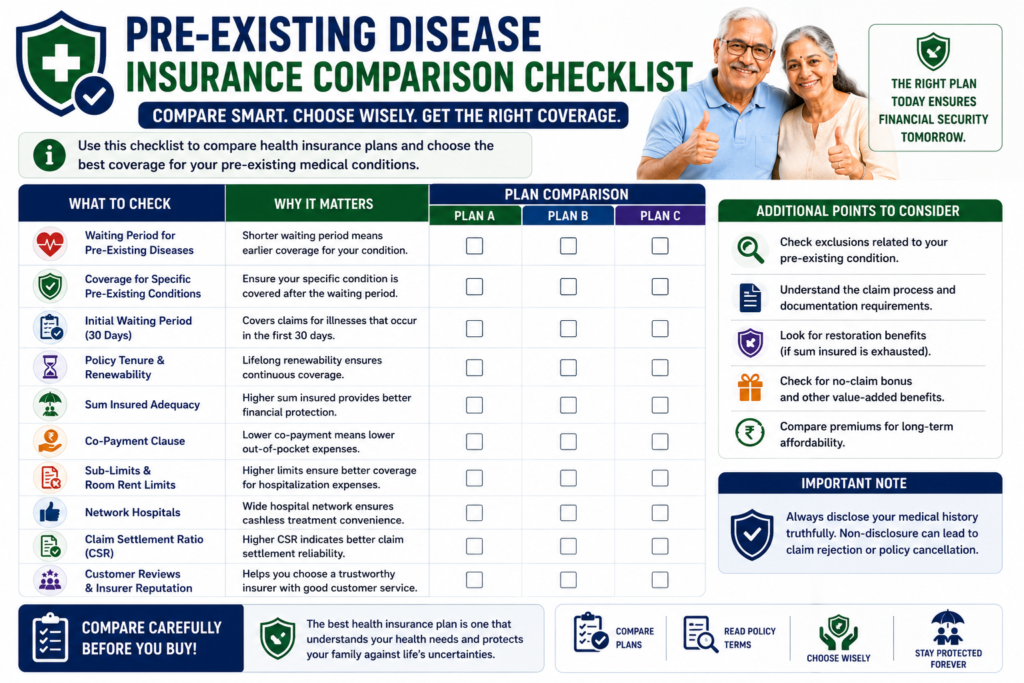
Key Features to Compare
Before purchasing a plan, compare:
| Feature | Why It Matters |
|---|---|
| Waiting Period | Faster access to coverage |
| Sum Insured | Available protection |
| Network Hospitals | Cashless treatment |
| Co-Payment | Out-of-pocket expenses |
| Claim Support | Better experience |
| Room Rent Limits | Impacts claim payout |
| Policy Exclusions | Understand limitations |
Compare Health Insurance Plans
Before purchasing:
✔ Compare waiting periods
✔ Compare claim support
✔ Compare hospital network
✔ Compare coverage benefits
👉 Compare plans through Policybazaar.
(Link)
Common Mistakes to Avoid
Hiding Medical History
Can result in claim rejection.
Choosing Only the Cheapest Plan
Coverage quality matters.
Ignoring Waiting Periods
Can create claim surprises.
Not Reading Exclusions
Important limitations may apply.
Buying Low Coverage
Medical inflation can increase treatment costs significantly.
Safe Buying Tips
✔ Disclose all medical conditions honestly
✔ Compare waiting periods
✔ Review policy exclusions
✔ Consider higher coverage
✔ Compare multiple insurers
✔ Check network hospitals
Real-Life Examples
Example 1
Diabetes Patient
Age:
45
Recommended:
₹15–20 lakh coverage
Reason:
Long-term healthcare needs.
Example 2
Hypertension Patient
Age:
52
Recommended:
₹15 lakh+ coverage
Reason:
Potential cardiac complications.
Example 3
Senior Citizen with Diabetes
Age:
68
Recommended:
₹25 lakh+ coverage with top-up plan.
Reason:
Higher hospitalization risk.
Our Recommendation
Young Adults with PED
₹10–15 lakh coverage
Middle-Aged Individuals
₹15–25 lakh coverage
Senior Citizens
₹25 lakh+ coverage and top-up plans
Metro City Residents
Higher coverage due to rising treatment costs
External Reference
For insurance regulations and consumer awareness information, refer to IRDAI.
Our Experience
At Nivesh Saathi, we regularly evaluate health insurance plans, waiting periods, claim experiences, and policy features to help readers choose suitable health insurance coverage for pre-existing medical conditions.
Conclusion
Having a pre-existing disease does not mean you cannot obtain health insurance.
The key is choosing the right policy, disclosing medical history honestly, understanding waiting periods, and selecting adequate coverage to protect against future healthcare expenses.
Compare Plans Now
Compare coverage, waiting periods, and premiums through Policybazaar.
(Link)
Related Articles
- Best Health Insurance Plans for Senior Citizens in India
- Best Health Insurance Plans for Parents in India
- Family Floater vs Individual Health Insurance
- How Much Health Insurance Cover Do You Need in India?
FAQ
Can I get health insurance with a pre-existing disease?
Yes. Most insurers offer coverage subject to waiting periods and policy conditions.
What is considered a pre-existing disease?
Any medical condition that existed before purchasing the policy.
Will diabetes be covered?
Yes, after applicable waiting periods.
What is the waiting period for pre-existing diseases?
Many plans have waiting periods ranging from 2–4 years.
Can claims be rejected if I hide a disease?
Yes. Non-disclosure may lead to claim rejection or policy cancellation.
Is health insurance expensive for people with pre-existing diseases?
Premiums may be higher depending on risk factors.
Which health insurance is best for people with pre-existing diseases?
The best plan depends on medical history, waiting periods, coverage needs, and budget.
Should I buy a top-up plan?
Top-up plans can provide additional coverage at relatively lower cost.
About the Author
Shashikant Pawar is the founder of Nivesh Saathi and writes practical guides on insurance, loans, investments, and personal finance for Indian readers.
About Nivesh Saathi
Nivesh Saathi helps Indians make smarter financial decisions through trustworthy, easy-to-understand financial education and product comparisons.
Disclaimer
This article is for educational purposes only and should not be considered insurance advice. Please review policy documents carefully before purchasing insurance.